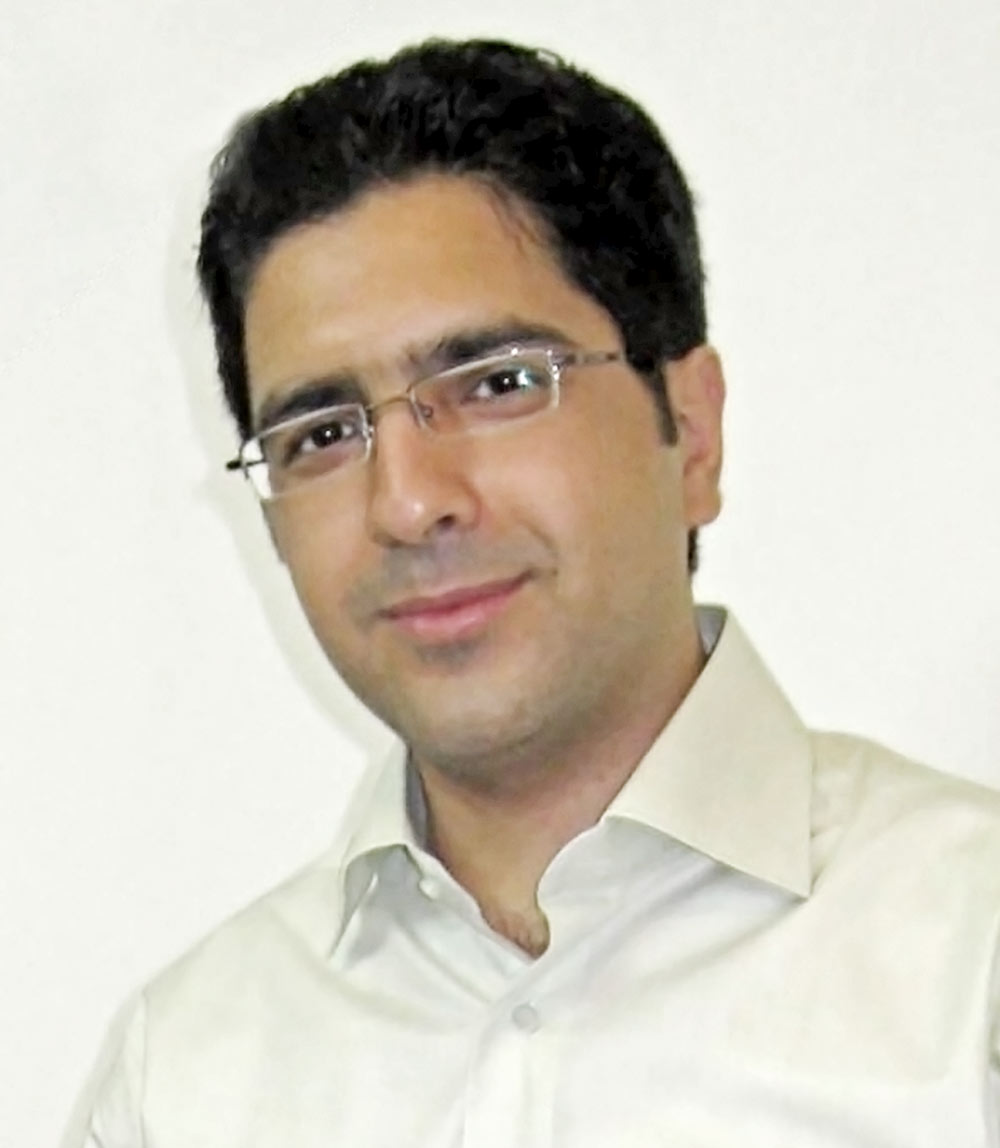
Who He Was
Saber Rastikerdar was a programmer, typeface designer and active member of the free and open-source software community. In 2015, he began developing a typeface initially called “Vazir” and later “Vazirmatn”: simple, legible and carefully crafted letterforms for everyone who writes in Persian.
He released his work under a free and open-source licence so that anyone—from students and programmers to designers and publishers—could use, modify and share it freely. Many of us encounter his work every day without realising it: on websites, in apps and in messaging services.
As he explained on his personal blog in 2016, the idea for Vazir had taken shape in 2015 because no Persian web font met his standards. The typeface he created went on to replace Tahoma on many Persian-language websites. His blog remains a record of his writing and ideas.
Saber passed away at the age of 36, but the letterforms he created continue to appear on thousands of pages every day.
Life and Work
- 11 December 1986He was born in Bandar Abbas. His father taught electricity and electronics at a technical high school, and the family lived in several cities because of his work.
- Teenage years in ShirazHe attended primary and middle school in Shiraz. At Namazi Technical High School, he was top of his class in electronics. He later insisted on transferring to computer studies, where he excelled as well. During those years, he became deeply interested in Linux and the open-source world.
- UniversityHe earned an associate degree in software at Bahonar University in Shiraz and a bachelor’s degree at Shamsipour University in Tehran. He remained in Tehran for the rest of his life.
- 2015He began work on the Vazir typeface. The first version was based on DejaVu Sans, a freely available typeface, and was developed using FontForge, a free-software font editor. The project continued for years, with each release carefully refined.
- 10 March 2022Vazirmatn was added to Google Fonts, making it available to Persian speakers around the world.
- Summer 2022He became ill. He sought treatment quietly and on his own, hoping to spare his family additional worry—especially his mother, who was herself in hospital.
- May 2023On his personal blog, he wrote that he had been battling an illness for about a year.
- 13 November 2023After months of battling the illness, he died at the age of 36.
Typefaces
Vazirmatn at a Glance
The Beginning
The project began in 2015 under the name “Vazir”. From version 32 onward, the typeface was called Vazirmatn.
Foundation and Tools
The first version was based on DejaVu Sans and created using FontForge. Intermediate font weights were generated by interpolation.
Latin Characters
Latin characters are drawn from Roboto; a version without Latin glyphs is also available.
Variable Font
All weights from 100 to 900 are contained in a single lightweight file designed for the web.
Languages
Since version 27: Persian, Arabic, Iranian Azerbaijani, Kurdish, Pashto, Urdu, Gilaki, Uzbek, Kazakh, and Balochi.
Available to Everyone
Available through npm, CDNs and Linux packages. On Fedora, it is the default font for Persian-speaking users.
His Character
Quiet and Unassuming
He was quiet and unassuming, and worked without seeking attention. His family and those close to him came to appreciate the significance of his work even more after he fell ill and after his death.
True to His Principles
Even during the most difficult days of treatment, he refused to use personal connections to jump the queue for medical care. He believed in respecting everyone else’s place in line.
Devoted to His Work and Iran
According to his family, Iran’s honour and standing mattered deeply to him. Until his final months, he hoped to return to his computer and complete his projects.
Legacy
Vazirmatn is released under the SIL Open Font License (OFL)—a gift to everyone, with nothing expected in return. Every Persian sentence displayed in this typeface today carries a trace of his work.
Vazirmatn is freely available through Google Fonts. Telegram Desktop uses it to display Persian and Arabic text, and the project’s GitHub repository has more than 3,000 stars and 200 forks.
The best way to honour him is to use his work respectfully, share it with others and keep his name alive.
Sources
- An account by Amin Rastikerdar, Saber’s brother (Shiraz Linux Community, November 2023) — Virgool
- Digiato — Saber Rastikerdar: the programmer known as “Iran’s Google Minister”
- Vazirmatn — Google Fonts
- Saber Rastikerdar — Wikipedia
- Vazirmatn — GitHub